Case study 03 / 08
Fitness tracker
Ebb
A screenless band and app that tell runners what to do today in one sentence, and keep the week inside a healthy range instead of chasing a daily score.
- Client
- Ebb Labs, Portland
- Year
- 2024
- Role
- Design lead, app and band
- Team
- Jonah Reyes, hardware
- Ilse Varga, firmware
- Kenji Moreau, iOS
- Amara Lind, sports physiologist
The problem
Ebb’s first band shipped with the usual daily strain score, and people chased it. They trained hard to turn a day green, skipped rest to keep a streak, and wrote in when the number dropped: “why is my score low?” was 30% of all support tickets. Our physiologist was seeing the overuse injuries the score was supposed to prevent.
Decisions
- 01
Say readiness in one sentence
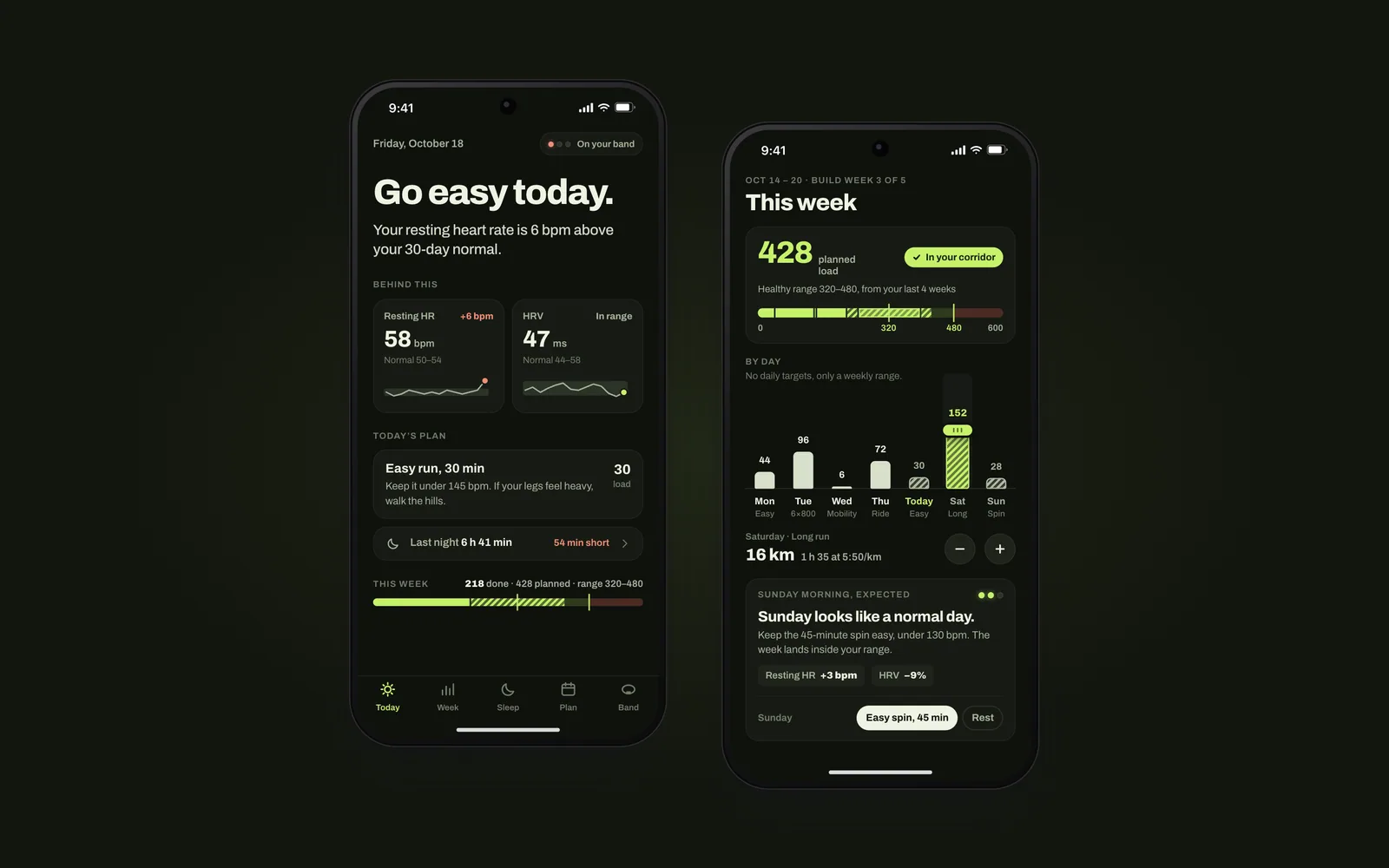
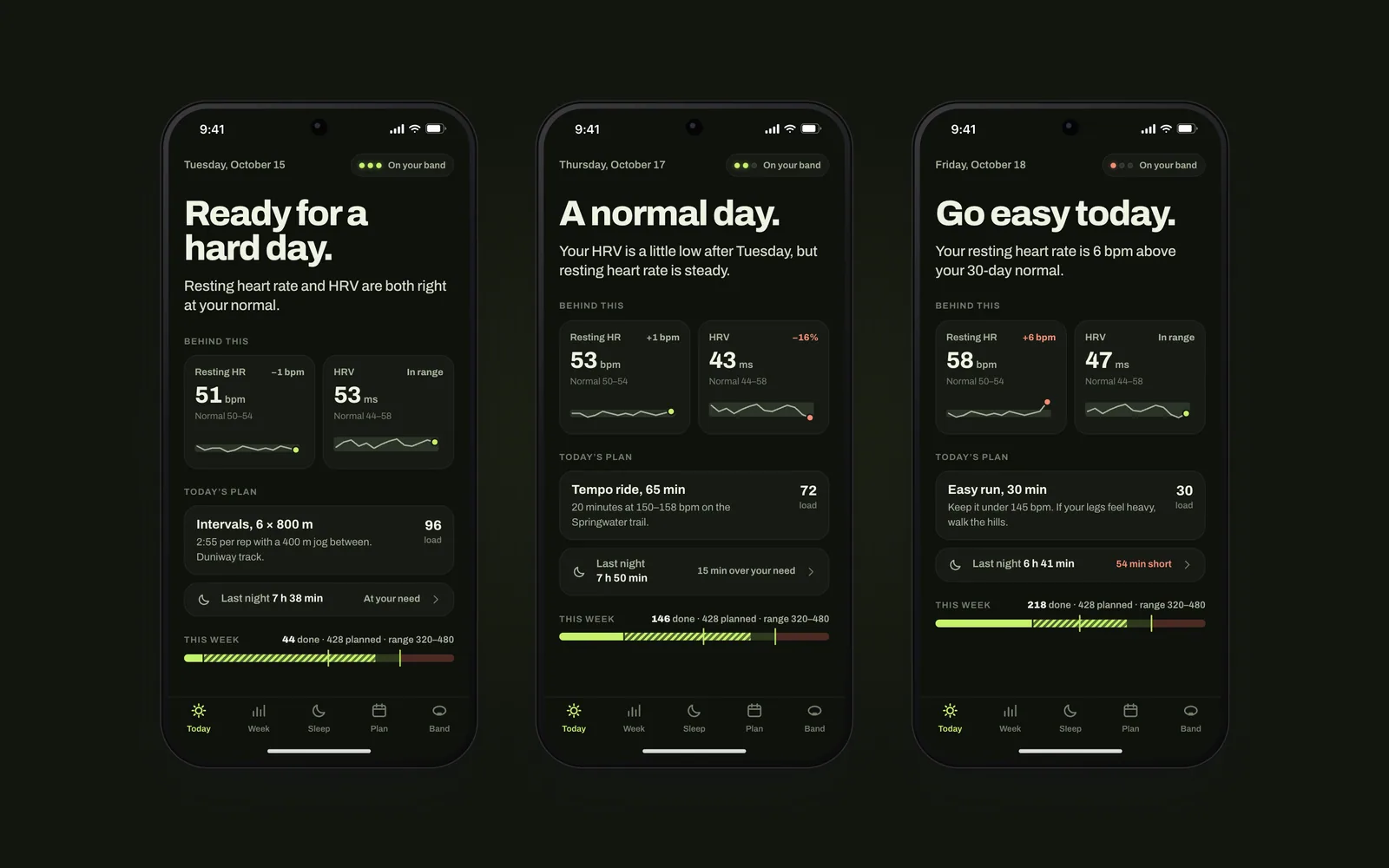
The morning screen no longer shows a number out of 100. It says what to do and why: “Go easy today. Your resting heart rate is 6 bpm above your 30-day normal.” The two signals behind it, resting heart rate and HRV, sit underneath with their normal range. Longtime wearers missed the score, so it stayed one tap away for a month; fewer than 4% ever opened it.
- 02
A weekly corridor, not daily targets
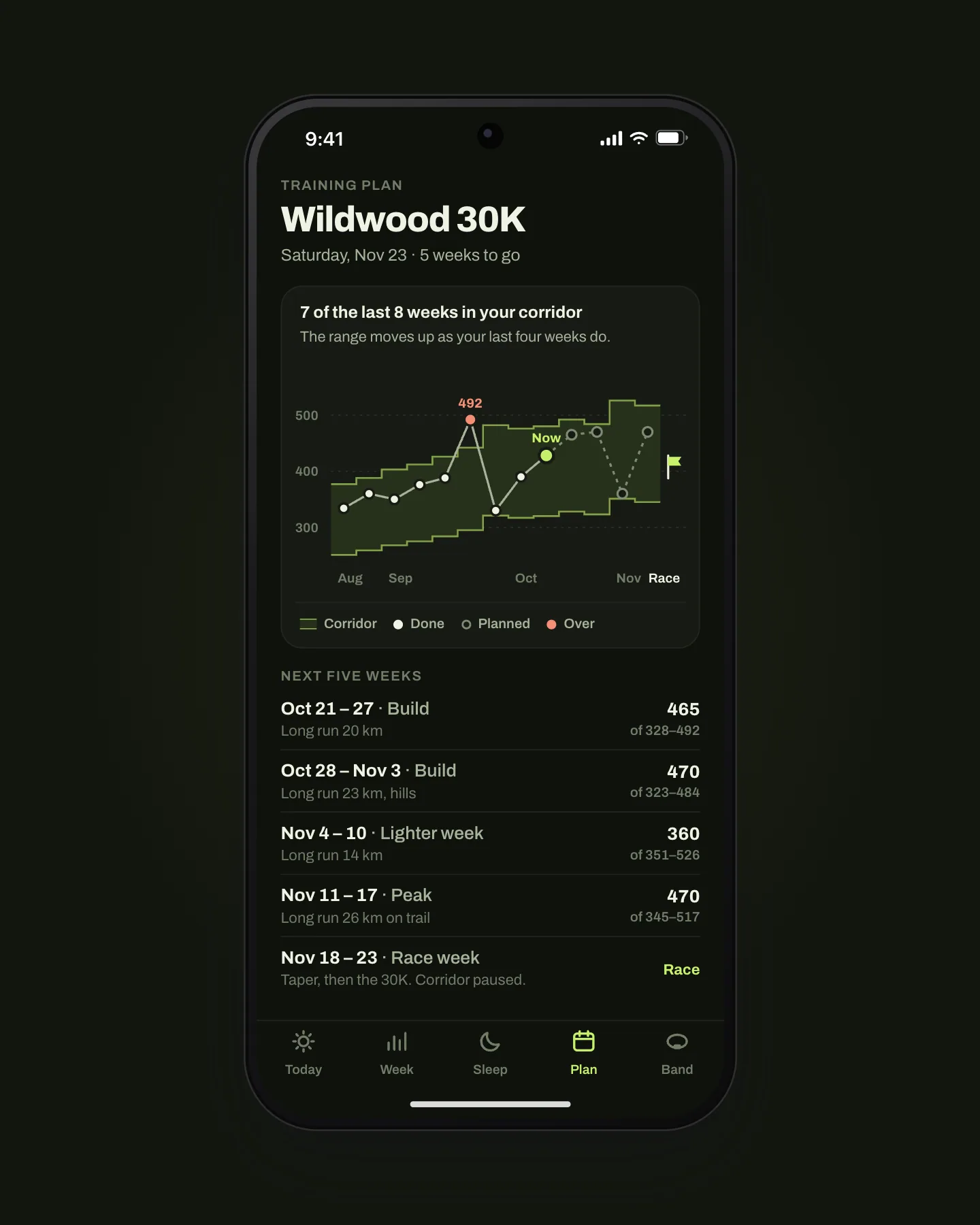
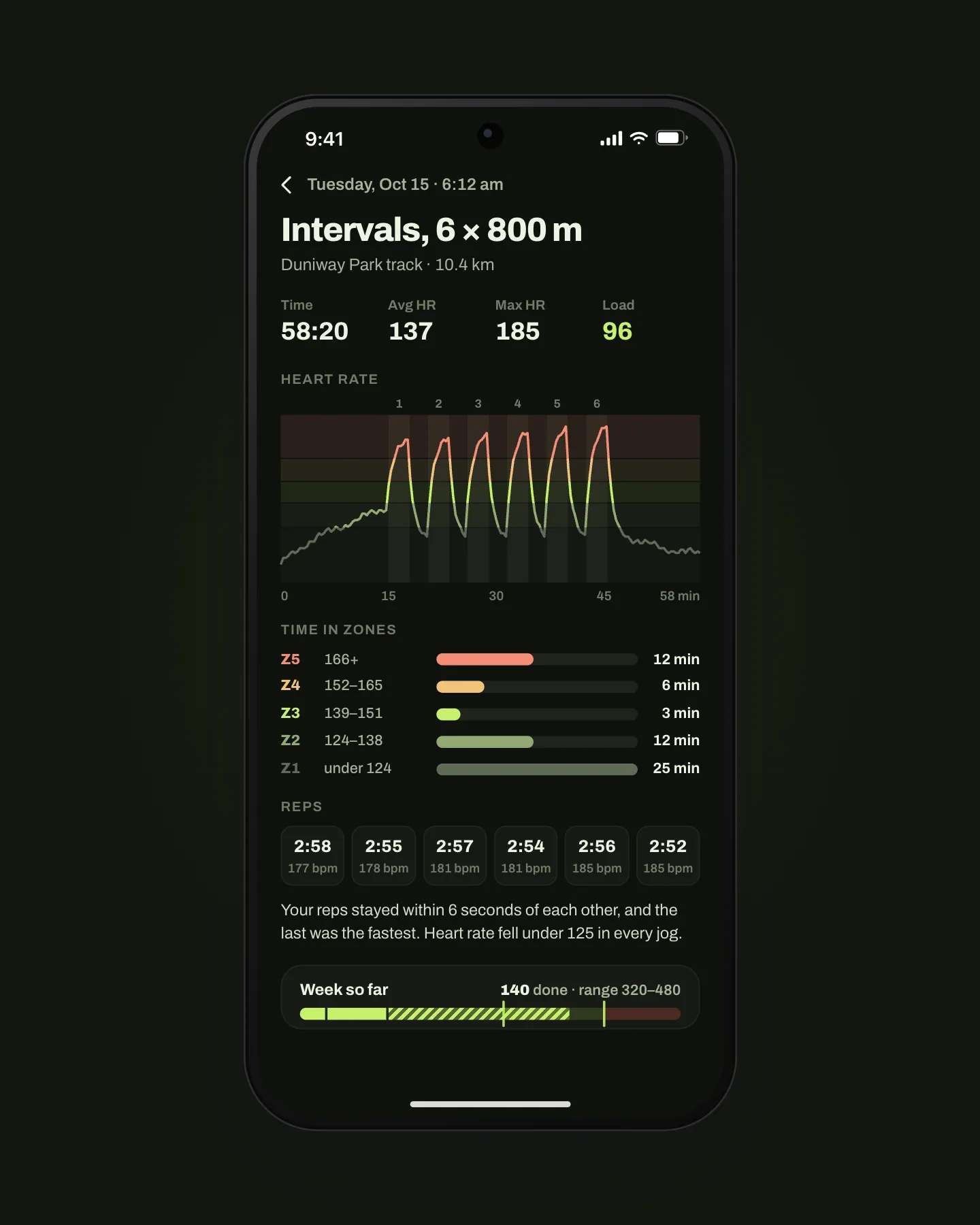
Load counts against a range built from your last four weeks, 0.8 to 1.2 times your average. Any single day can be big or small; what matters is where Sunday lands. Planned workouts show in the corridor before you do them, so an overreaching week is visible on Friday instead of after the injury.
- 03
Three LEDs, no screen
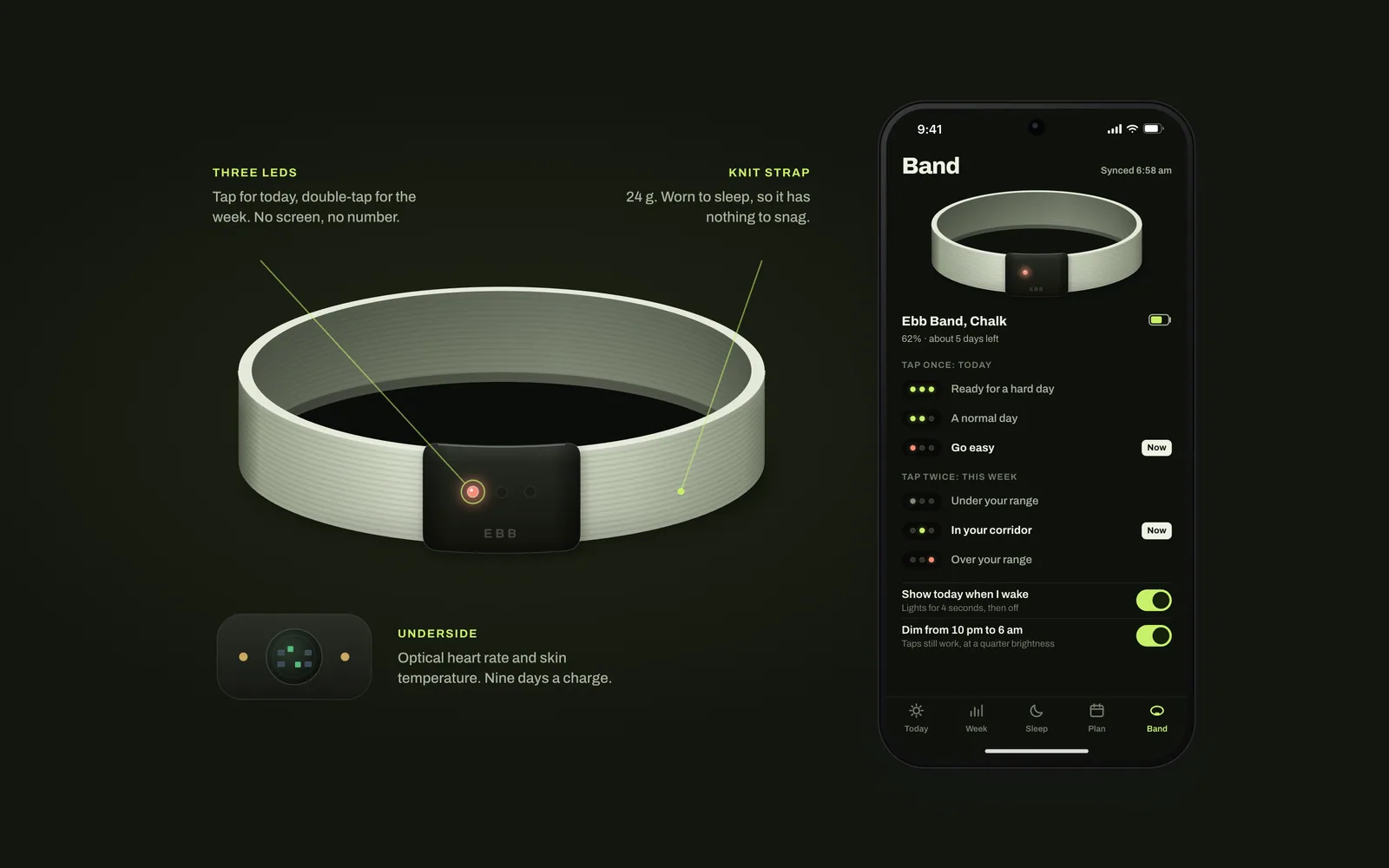
Hardware had a small OLED working, and every layout we tried on it became a smaller score. Three LEDs can’t show a number. Tap once for today, twice for where the week is heading. Dropping the display took projected battery life from 4 days to 9.
Outcome
In the 16 weeks after launch, “why is my score low” tickets fell 71%. Four-week retention of new wearers rose 18%, from 54% to 64%. In an opt-in survey of 1,240 wearers, self-reported overuse injuries fell 34% against the same group’s previous quarter.
The brief
Ebb Labs is a twelve-person wearables company in Portland. Its band is for recreational runners and riders: people training for a half marathon or a gravel century, not professionals. The founders asked me to redesign the app around the question their support inbox kept asking, some version of “why is my score low?”
I read 400 of those tickets and sat in on six coaching sessions with Amara, our physiologist. The score wasn’t wrong; it was being used as a target. A daily number invites you to beat it every day, and training doesn’t work that way. Hard days need easy days after them, and the unit that matters is the week.
Live demo
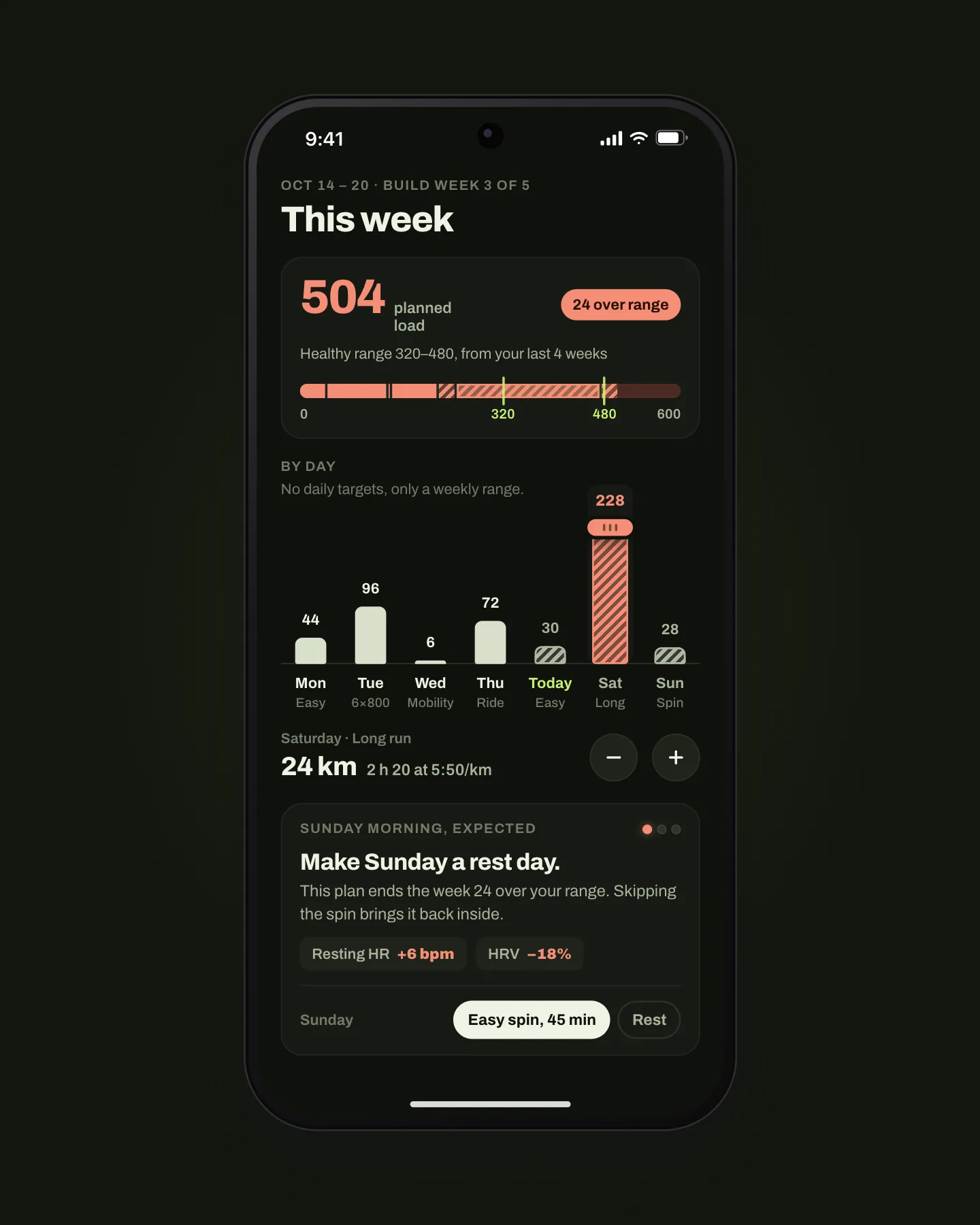
Plan Saturday’s long run
Drag Saturday’s bar or use the arrow keys, and watch the week total and Sunday’s sentence. When the week goes over, try Rest on Sunday.
The week tips over at 22 km. The fix depends on how far over you are: rest on Sunday for a small overshoot, a shorter Saturday for a big one.
Three lights
The band was going to have a screen. Jonah had a 0.9-inch OLED running in the first prototype, and every screen we designed for it turned into a smaller version of the score. Three LEDs can’t show a number, which settled the argument.
Tap once and they show today: three for ready, two for a normal day, one coral for go easy. Tap twice and they show the week: left for under, middle for inside the corridor, right for over. In testing, 11 of 12 people could read both patterns after a day without opening the app.
My runners used to show up wrecked on Tuesdays because an app told them Sunday was a green day. Now they ask me whether their week is in the corridor, which is the question I wanted them asking all along.”
Results
- “Why is my score low?” tickets
- −71%
- were 30% of all support tickets
- Four-week retention
- +18%
- 54% to 64% of new wearers
- Self-reported overuse injuries
- −34%
- 12-week survey of 1,240 wearers
What I would do next
The corridor counts a run and a ride as the same kind of load, and they aren’t: two hours on the bike leaves your legs far fresher than two hours on the road. Amara and I are testing a version that tracks impact separately, so a triathlete’s week can be full without reading as over.